Publications

Our teams aspire to make discoveries that impact everyone, and core to our approach is sharing our research and tools to fuel progress in the field.
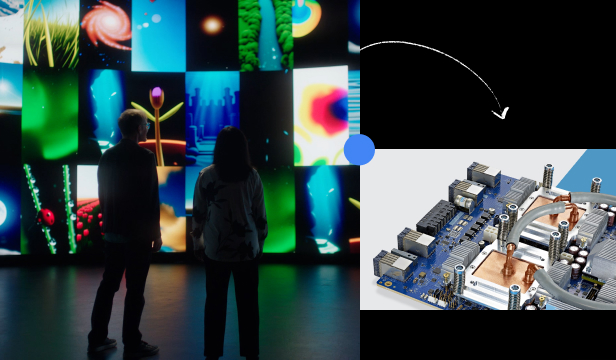
people standing in front of a screen with images and a chipboard

Our teams aspire to make discoveries that impact everyone, and core to our approach is sharing our research and tools to fuel progress in the field.

Sort By
  • Title
  • Title, descending
  • Year
  • Year, descending
1 - 15 of 11259 publications
    Preview abstract This talk addresses the challenges of operating Google's monitoring systems at scale, handling terabytes of telemetry data and preventing overload from diverse workloads. We'll explore how Google's internal client library and Monarch, its planet-scale time-series database, work together for cost-effective data collection. Key principles include a distributed push model, dynamic client-side data reduction, centralized retention, and periodic metric analysis. The session will then bridge these concepts to the open-source world, discussing our work with OpenTelemetry's OpAMP protocol to achieve similar scalable and efficient telemetry collection. Attendees will gain insights into adapting these principles for cost savings and learn about our collaboration with the OpAMP SIG to benefit the broader community. View details
    Performance analysis of updated Sleep Tracking algorithms across Google and Fitbit wearable devices
    Arno Charton
    Linda Lei
    Siddhant Swaroop
    Marius Guerard
    Michael Dixon
    Logan Niehaus
    Shao-Po Ma
    Logan Schneider
    Ross Wilkinson
    Ryan Gillard
    Conor Heneghan
    Pramod Rudrapatna
    Mark Malhotra
    Shwetak Patel
    Google, Google, 1600 Amphitheatre Parkway Mountain View, CA 94043 (2026) (to appear)
    Preview abstract Background: The general public has increasingly adopted consumer wearables for sleep tracking over the past 15 years, but reports on performance versus gold standards such as polysomnogram (PSG), high quality sleep diaries and at-home portable EEG systems still show potential for improved performance. Two aspects in particular are worthy of consideration: (a) improved recognition of sleep sessions (times when a person is in bed and has attempted to sleep), and (b) improved accuracy on recognizing sleep stages relative to an accepted standard such as PSG. Aims: This study aimed to: 1) provide an update on the methodology and performance of a system for correctly recognizing valid sleep sessions, and 2) detail an updated description of how sleep stages are calculated using accelerometer and inter-beat intervals Methods: Novel machine learning algorithms were developed to recognize sleep sessions and sleep stages using accelerometer sensors and inter-beat intervals derived from the watch or tracker photoplethysmogram. Algorithms were developed on over 3000 nights of human-scored free-living sleep sessions from a representative population of 122 subjects, and then tested on an independent validation set of 47 users. Within sleep sessions, an algorithm was developed to recognize periods when the user was attempting to sleep (Time-Attempting-To-Sleep = TATS). For sleep stage estimation, an algorithm was trained on human expert-scored polysomnograms, and then tested on 50 withheld subject nights for its ability to recognize Wake, Light (N1/N2), Deep (N3) and REM sleep relative to expert scored labels. Results: For sleep session estimation, the algorithm had at least 95% overlap on TATS with human consensus scoring for 94% of nights from healthy sleepers. For sleep stage estimation, comparing with the current Fitbit algorithm, Cohen’s kappa for four-class determination of sleep stage increased from an average of 0.56 (std 0.13) to 0.63 (std 0.12), and average accuracy increased from 71% (std 0.10) to 77% (std 0.078) Conclusion: A set of new algorithms has been developed and tested on Fitbit and Pixel Watches and is capable of providing robust and accurate measurement of sleep in free-living environments. View details
    Preview abstract A growing body of qualitative research has identified contextual risk factors that elevate people’s chances of experiencing digital-safety attacks. However, the lack of quantitative data on the population level distribution of these risk factors prevents policymakers and tech companies from developing targeted, evidence-based interventions to improve digital safety. To address this gap, we surveyed 5,001 adults in the United States to analyze: (1) the frequency of and relationship between digital-safety attacks (e.g., scams, harassment, account hacking), and (2) how these attacks align with 10 contextual risk factors. Nearly half of our respondents identify as resource constrained, which significantly correlates with higher likelihood of experiencing four common attacks. We also present qualitative insights to expand our understanding of the factors beyond the existing literature (e.g., “prominence” included high-visibility roles in local communities). This study provides the first large-scale quantitative analysis correlating digital-safety attacks with contextual risk factors and demographics. View details
    The Perfection Paradox: From Architect to Curator in AI-Assisted API Design
    JJ Geewax
    David R Karger
    Extended Abstracts of the 2026 CHI Conference on Human Factors in Computing Systems (CHI EA '26), ACM, Barcelona, Spain, TBD
    Preview abstract Enterprise API design is often bottlenecked by the tension between rapid feature delivery and the rigorous maintenance of usability standards. We present an industrial case study evaluating an AI-assisted design workflow trained on API Improvement Proposals(AIPs). Through a controlled study with 16 industry experts, we compared AI-generated API specifications against human-authored ones. While quantitative results indicated AI superiority in 10 of 11 usability dimensions and an 87% reduction in authoring time, qualitative analysis revealed a paradox: experts frequently misidentified AI work as human (19% accuracy) yet described the designs as unsettlingly “perfect.” We characterize this as a “Perfection Paradox”—where hyper-consistency signals a lack of pragmatic human judgment. We discuss the implications of this perfection paradox, proposing a shift in the human designer’s role from the “drafter” of specifications to the “curator” of AI-generated patterns. View details
    MoXaRt: Audio-Visual Object-Guided Sound Interaction for XR
    Sieun Kim
    Qianhui Zheng
    Ruoyu Xu
    Ravi Tejasvi
    Anuva Kulkarni
    Junyi Zhu
    2026
    Preview abstract In Extended Reality (XR), complex acoustic environments often overwhelm users, compromising both scene awareness and social engagement due to entangled sound sources. We introduce MoXaRt, a real-time XR system that uses audio-visual cues to separate these sources and enable fine-grained sound interaction. MoXaRt's core is a cascaded architecture that performs coarse, audio-only separation in parallel with visual detection of sources (e.g. faces, instruments). These visual anchors then guide refinement networks to isolate individual sources, separating complex mixes of up to five concurrent sources (e.g. two voices + three instruments) with ca. 2 second processing latency. We validate MoXaRt through a technical evaluation on a new, complex dataset we collected, and a 22-participant user study. Our results demonstrate that MoXaRt significantly improves communication clarity—boosting listening comprehension in noisy conditions by 33.2% (p=0.0058)—and significantly reduces cognitive load (M=7.50 vs. M=3.36, p<0.001), paving the way for more perceptive and socially adept XR experiences. View details
    XProf: An Open, Scalable and Extensible Profiling System for the Modern ML Stack
    Naveen Kumar
    Jose Baiocchi Paredes
    Scott Goodson
    Kelvin Le
    Yin Zhang
    Kan Cai
    Jiten Thakkar
    Sai Ganesh Bandiatmakuri
    Yogesh SY
    Ani Udipi
    Vikas Aggarwal
    2026
    Preview abstract Optimizing Large Language Models across thousands of hardware accelerators requires deep system expertise. To address modern machine learning optimization needs, we present XProf, the de-facto machine learning profiler for the OpenXLA ecosystem. XProf delivers actionable optimization suggestions and in-depth performance analysis, empowering machine learning researchers and framework users to improve efficiency without specialized systems knowledge. XProf provides a unified, full-stack view of both host (CPU) and device (accelerator - TPUs/GPUs) performance, leveraging tools like the Roofline Model for comprehensive analysis. Engineered with a distributed architecture, XProf is battle-tested at Google to profile across thousands of chips with minimal overhead (<1%) for the workload. Using the Open Source C API extension to PJRT, this pluggable architecture is already adopted by other third-party accelerator vendors. Originally developed at Google and now open-sourced within the OpenXLA Project, XProf has proven indispensable in production, driving significant efficiency gains and enabling critical results, including winning MLPerf submissions. This paper presents the design and architecture of XProf, showcases its differentiating tools & capabilities, and highlights its impact within Google and across the industry as a state of the art ML profiler. The codebase is at https://github.com/openxla/xprof. View details
    Preview abstract Audio Description ( AD) provides essential access to visual media for blind and low vision ( BLV) audiences. Yet current AD production tools remain largely inaccessible to BLV video creators, who possess valuable expertise but face barriers due to visually- driven interfaces. We present ADCanvas, a multimodal authoring system that supports non- visual control over audio description ( AD) creation. ADCanvas combines conversational interaction with keyboard- based playback control and a plain- text, screen reader– accessible editor to support end- to- end AD authoring and visual question answering ( VQA). Combining screen- reader- friendly controls with a multimodal LLM agent, ADCanvas supports live VQA, script generation, and AD modification. Through a user study with 12 BLV video creators, we find that users adopt the conversational agent as an informational aide and drafting assistant, while maintaining agency through verification and editing. For example, participants saw themselves as curators who received information from the model and filtered it down for their audience. Our findings offer design implications for accessible media tools, including precise editing controls, accessibility support for creative ideation, and configurable rules for human- AI collaboration. View details
    Preview abstract This framework manages AI agents by establishing behavioral boundaries and a persistent identity. It uses a multi-layered stack, combining safety rules with brand guidelines, to shape an agent's reasoning. Features include authority decay to limit power if confidence drops and memory segmentation to prevent data tampering. Centralized oversight ensures these digital representatives remain aligned with company policies through continuous monitoring and testing. View details
    ALF: Advertiser Large Foundation Model for Multi-Modal Advertiser Understanding
    Sunny Rajagopalan
    Alireza Golestaneh
    Shubhra Chandra
    Min Zhou
    Jonathan Vronsky
    Songbai Yan
    2026
    Preview abstract We present ALF (Advertiser Large Foundation model), a multi-modal transformer architecture for understanding advertiser behavior and intent across text, image, video and structured data modalities. Through contrastive learning and multi-task optimization, ALF creates unified advertiser representations that capture both content and behavioral patterns. Our model achieves state-of-the-art performance on critical tasks including fraud detection, policy violation identification, and advertiser similarity matching. In production deployment, ALF reduces false positives by 90\% while maintaining 99.8\% precision on abuse detection tasks. The architecture's effectiveness stems from its novel combination of multi-modal transformations, intersample attention mechanism, spectrally normalized projections, and calibrated probabilistic outputs. View details
    Exponential quantum advantage in processing massive classical data
    Haimeng Zhao
    Alexander Zlokapa
    John Preskill
    Hsin-Yuan (Robert) Huang
    arXiv:2604.07639 (2026)
    Preview abstract Broadly applicable quantum advantage, particularly in classical data processing and machine learning, has been a fundamental open problem. In this work, we prove that a small quantum computer of polylogarithmic size can perform large-scale classification and dimension reduction on massive classical data by processing samples on the fly, whereas any classical machine achieving the same prediction performance requires exponentially larger size. Furthermore, classical machines that are exponentially larger yet below the required size need superpolynomially more samples and time. We validate these quantum advantages in real-world applications, including single-cell RNA sequencing and movie review sentiment analysis, demonstrating four to six orders of magnitude reduction in size with fewer than 60 logical qubits. These quantum advantages are enabled by quantum oracle sketching, an algorithm for accessing the classical world in quantum superposition using only random classical data samples. Combined with classical shadows, our algorithm circumvents the data loading and readout bottleneck to construct succinct classical models from massive classical data, a task provably impossible for any classical machine that is not exponentially larger than the quantum machine. These quantum advantages persist even when classical machines are granted unlimited time or if BPP=BQP, and rely only on the correctness of quantum mechanics. Together, our results establish machine learning on classical data as a broad and natural domain of quantum advantage and a fundamental test of quantum mechanics at the complexity frontier. View details
    Approximate vs Precise: An experiment in what impacts user choice when apps request location access
    Extended Abstracts of the 2026 CHI Conference on Human Factors in Computing Systems (CHI EA ’26), April 13–17, 2026, Barcelona, Spain (2026)
    Preview abstract User location data is highly sensitive, yet commonly requested by mobile apps for both core functionality and monetization. To improve user privacy, the major mobile platforms, Android and iOS, made changes so that when apps request precise location access, users can choose to share only their approximate location. However, the platforms have diverging interfaces: Android offers a side-by-side choice and iOS offers a corner toggle. This study evaluates which factors impact users’ choices when apps request location access via a randomized controlled experiment with 2579 US Android users. We tested the impact of app type, whether a reason for the request was provided, and the quality and content of the reason, including monetization. We do not find the reasons have an effect. Instead, we find users’ choices are impacted by app type and user demographics. We find that when users are given a side-by-side choice to allow approximate versus precise location access, they make reasonable choices. Of users who allowed access, the vast majority (90.7%) chose precise for a rideshare app versus the majority (71.3%) chose approximate for a local news app. Concerningly, the majority also allowed location access to a wallpaper app, and older users were significantly more likely to allow apps precise location access. We conclude by discussing implications for app platforms and future work. View details
    Preview abstract Browser fingerprinting is the practice of tracking users across the Web by collecting attributes from their devices and combining them to create unique identifiers. This practice poses major privacy risks to users, and more than a decade of research has quantified fingerprinting risks due to various attributes, leading browser developers to implement many privacy-enhancing changes. Early work used Shannon entropy to quantify risks. However, Shannon entropy can grow with dataset size, limiting the ability to compare datasets and results. Researchers then introduced normalized entropy as a measure for comparing browser fingerprinting datasets of different sizes and numerous works followed using normalized entropy for this purpose. We identify and address a resulting problem in the fingerprinting literature. We show normalized entropy is ill-suited to compare datasets of different sizes — it decreases as dataset size increases. We show this both analytically and empirically, leveraging a recently published dataset of browser attributes commonly used for fingerprinting. Given the unmet need for a better fingerprinting risk measure, we define a minimal set of desired properties for such a measure: scale-invariance, monotonicity and estimability. We then propose to use Tsallis entropy as a more interpretable fingerprinting risk measure. We evaluate Shannon, normalized, and Tsallis entropy with respect to the properties, and prove that only Tsallis entropy satisfies all of them. View details
    DeduBB: Binary Code Size Reduction via Post-Link Basic Block De-duplication
    Chaitanya Mamatha Ananda
    Rajiv Gupta
    Mahbod Afarin
    Han Shen
    LCTES (Languages, Compilers, Tools and Theory of Embedded Systems) (2026) (to appear)
    Preview abstract Binary sizes of newer versions of software applications tend to be larger, primarily due to feature bloat. This poses various challenges, particularly for mobile applications. It affects upgrade rates directly impacting revenues, increases maintenance costs of supporting multiple versions, and prevents some users from getting critical security fixes. Code bloat also poses a problem for large warehouse-scale applications. Such applications experience performance degradation when their code size exceeds what smaller and more efficient code models can handle. In this paper, we introduce a post-link optimization tech nique called DeduBB, which deduplicates basic blocks of an application across procedure boundaries. While prior tech- niques used function outlining to de-duplicate redundant code sequences, it missed out on many opportunities as it cannot handle code that manipulates the program stack. In addition, previous techniques were either limited to the scope of a module or lacked scalable implementations required to handle large warehouse-scale applications. Our technique, DeduBB, handles all types of code duplication as we use a novel save-and-jump code pattern to execute de-duplicated code blocks. In addition, DeduBB has been designed to work on scalable post-link optimizers and can even be applied to large warehouse-scale datacenter applications. Finally, DeduBB is profile-guided and can be applied selectively to infrequently executed cold basic blocks to not affect application performance. In fact, in several cases, the performance of the smaller application binary improves due to reductions in its hot working set size. We have implemented our technique on the state-of-the-art post link optimizers, BOLT and Propeller. Experiments show that we can significantly reduce the code size of several benchmarks by 1.55% to 18.63%, on both Arm and x86 platforms, and on binaries that have already been heavily optimized for size using existing code size reduction features. Furthermore, aided by profiles, our technique can retain more than 80% of the maximal code size savings without affecting performance. View details
    Preview abstract Large language models (LLMs) are trained on web-scale corpora that exhibit steep power-law distributions, in which the distribution of knowledge is highly long-tailed, with most appearing infrequently. While scaling has improved average-case performance, persistent failures on low-frequency, domain-specific, cultural, and temporal knowledge remain poorly characterized. This paper develops a structured taxonomy and analysis of long-tail knowledge in large language models, synthesizing prior work across technical and sociotechnical perspectives. We organize the literature along four complementary axes: how long-tail knowledge is defined, the mechanisms by which it is lost or distorted during training and inference, the technical interventions proposed to mitigate these failures, and the implications of these failures for fairness, accountability, transparency, and user trust. We further examine how existing evaluation practices obscure tail behavior and complicate accountability for rare but consequential failures. The paper concludes by identifying open challenges related to privacy, sustainability, and governance that constrain long-tail knowledge representation. Taken together, this paper provides a unifying conceptual framework for understanding how long-tail knowledge is defined, lost, evaluated, and manifested in deployed language model systems. View details
    Progressive Photorealistic Simplification
    Adi Rosenthal
    Yedid Hoshen
    Arik Shamir
    2026
    Preview abstract Existing image simplification techniques often rely on Non-Photorealistic Rendering (NPR), transforming photographs into stylized sketches, cartoons, or paintings. While effective at reducing visual complexity, such approaches typically sacrifice photographic realism. In this work, we explore a complementary direction: simplifying images while preserving their photorealistic appearance. We introduce progressive semantic image simplification, a framework that iteratively reduces scene complexity by removing and inpainting elements in a controlled manner. At each step, the resulting image remains a plausible natural photograph. Our method combines semantic understanding with generative editing, leveraging Vision-Language Models (VLMs) to identify and prioritize elements for removal, and a learned verifier to ensure photorealism and coherence throughout the process. This is implemented via an iterative \emph{Select–Remove–Verify} pipeline that produces high-quality simplification trajectories. To improve efficiency, we further distill this process into an image-to-video generation model that directly predicts coherent simplification sequences from a single input image. Beyond generating cleaner and more focused compositions, our approach enables applications such as content-aware decluttering, semantic layer decomposition, and interactive editing. More broadly, our work suggests that simplification through structured content removal can serve as a practical mechanism for guiding visual interpretation within the photorealistic domain, complementing traditional abstraction methods. View details

    Follow us

    ×