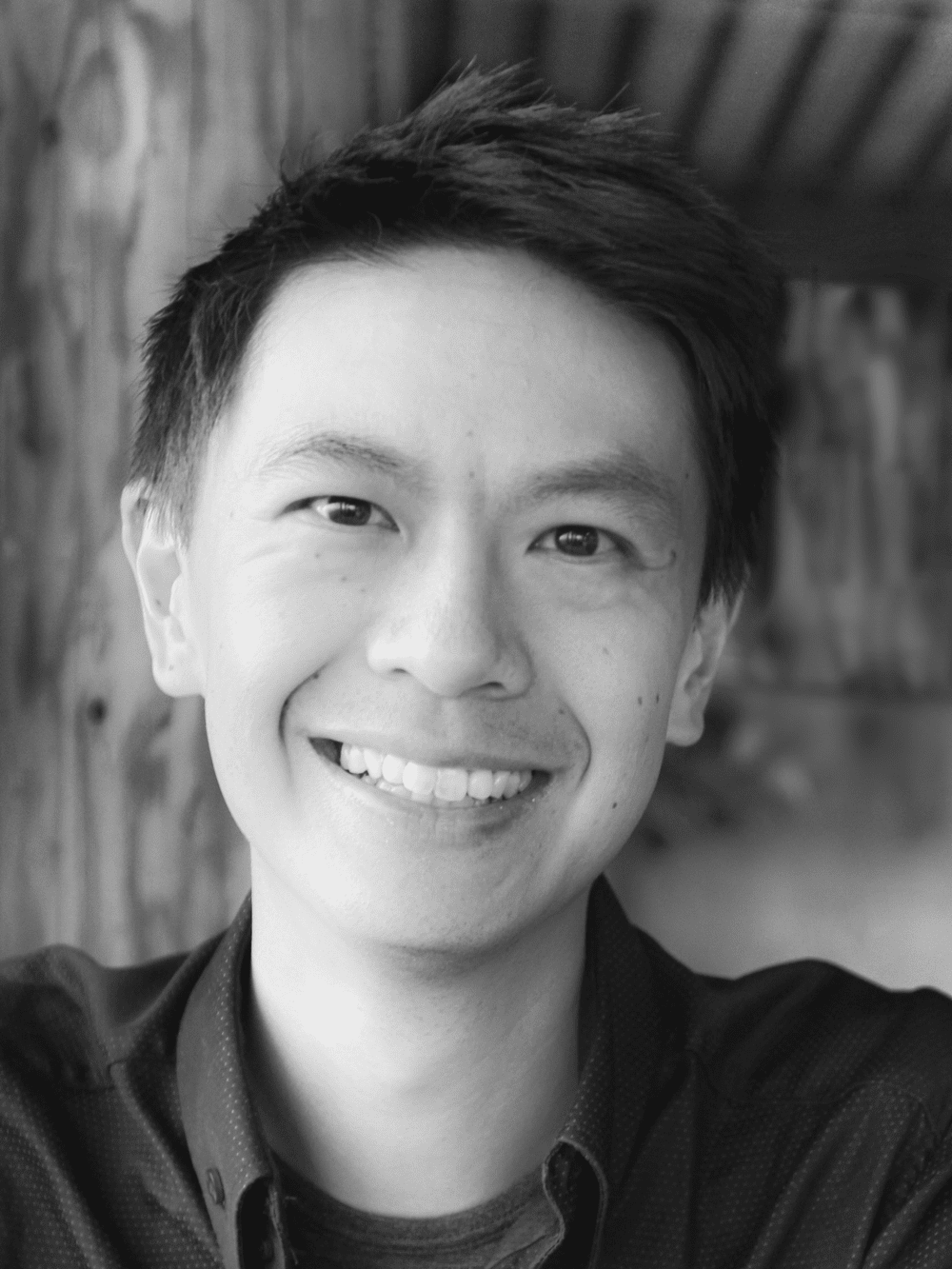
Simon Tong

Simon Tong

Simon is a Principle Engineer specializing in machine learning and artificial intelligence. He has made foundational contributions to Google's Web Search ranking, was a member of the small team that built the original AdSense prototype and production system, and he co-created the first broadly used large-scale machine learning system at Google.

Simon has applied machine learning to many areas across Google. For example, he co-created Gmail's original spam filter, built the original machine learning system that decided what to display on Google's search page beyond the regular ten-blue-links, co-designed the blue and red underline system in Docs, Gmail and Android, and has co-designed multiple systems that each increased revenue by a few to several percent.

More recently, Simon helped design large language model pre-training datasets, co-designed Gemini components that improved Google Search AI overviews and AI mode, and is exploring the extent to which LLMs are aware of their internal thought processes.

Authored Publications
Sort By
  • Title
  • Title, descending
  • Year
  • Year, descending
RewriteLM: An Instruction-Tuned Large LanguageModel for Text Rewriting
Liangchen Luo
Yun Zhu
Lei Meng
Proceedings of the AAAI Conference on Artificial Intelligence, 38(17), 18970-18980 (2024)
Preview abstract In recent years, Large Language Models (LLMs) have demonstrated impressive zero-shot capabilities in text generation tasks expressed through natural language instructions. However, text rewriting is a challenging task, and unintended modifications can negatively impact the system's performance. To address this challenge, we introduce a novel benchmark for text rewriting that covers a wide variety of rewriting types expressed through natural language instructions. Unlike previous benchmarks, which were primarily focused on limited rewrite styles and sentence-level rewriting, our benchmark is specifically designed to facilitate open-ended rewriting of long-form text. Additionally, we present a strong baseline model, RewriteLM, which is an instruction-tuned large language model for text rewriting. The model is trained using supervised fine-tuning, reward training, and reinforcement learning. To minimize human intervention in the data collection process, we develop new data generation strategies: (1) utilizing high-quality, long-form edits from Wikipedia as our primary natural training data source, (2) generating a synthetic dataset that includes diverse edit types and non-Wiki domains using chain-of-thoughts and the capabilities of LLMs, and (3) employing human-designed heuristic rankers to generate preference data. Our experiments demonstrate the effectiveness of our proposed benchmark and baseline model, as well as the benefits of our data collection strategies in minimizing human intervention. View details
Sparsely Activated Language Models are Efficient In-Context Learners
Andrew Dai
Barret Richard Zoph
Dmitry (Dima) Lepikhin
Emma Wang
Kathy Meier-Hellstern
Kun Zhang
Liam B. Fedus
Maarten Paul Bosma
Marie Pellat
Maxim Krikun
Nan Du
Quoc V. Le
Tao Wang
Toju Duke
Yanping Huang
Yanqi Zhou
Yonghui Wu
Yuanzhong Xu
Zhifeng Chen
Zongwei Zhou
(2022)
Preview abstract Scaling language models with more data, compute and parameters has driven significant progress in natural language processing. For example, thanks to scaling, GPT-3 was able to achieve strong performance on few-shot learning. However, training these large dense models require significant amounts of computing resources. In this paper, we develop a family of sparsely activated mixture-of-expert language models named \glam (\textbf{G}eneralist \textbf{La}nguage \textbf{M}odel), which can have many more parameters but require significant less training cost than dense models. The largest \glam has 1.2 trillion parameters, which is approximately 7x larger than GPT-3 but can be trained more efficiently. With only 1/3 of energy consumption to train GPT-3, \glam achieves better overall performance on 29 zero-shot and one-shot NLP tasks. For example, \glam gets 75.0\% one-shot exact match accuracy on the TriviaQA test server, a significant improvement over 68.0\% obtained by GPT-3. View details
Preview abstract Grammatical Error Correction (GEC) has been recently modeled using the sequence-to-sequence framework. However, unlike sequence transduction problems such as machine translation, GEC suffers from the lack of plentiful parallel data. We describe two approaches for generating large parallel datasets for GEC using publicly available Wikipedia data. The first method extracts source-target pairs from Wikipedia edit histories with minimal filtration heuristics, while the second method introduces noise into Wikipedia sentences via round-trip translation through bridge languages. Both strategies yield similar sized parallel corpora containing around 4B tokens. We employ an iterative decoding strategy that is tailored to the loosely supervised nature of our constructed corpora. We demonstrate that neural GEC models trained using either type of corpora give similar performance. Fine-tuning these models on the Lang-8 corpus and ensembling allows us to surpass the state of the art on both the CoNLL-2014 benchmark and the JFLEG task. We provide systematic analysis that compares the two approaches to data generation and highlights the effectiveness of ensembling. View details
×