RK Neelakandan
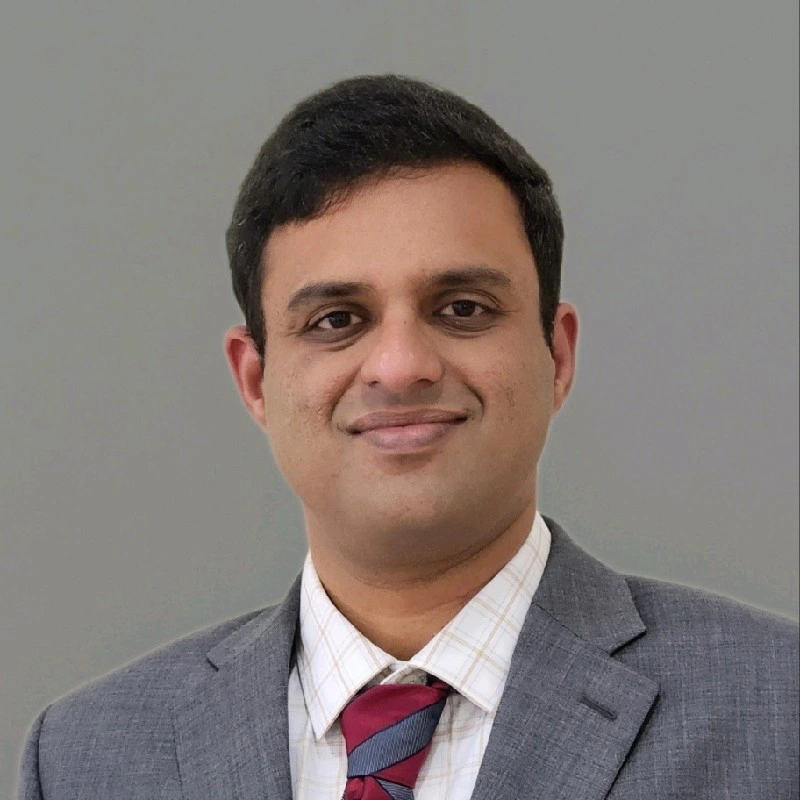
Ramakrishnan (RK) Neelakandan is a Health SW Quality and Solution Engineering Lead at Google. With over 15 years of experience in healthcare and life-sciences technologies, he focuses on making artificial intelligence and digital health products safe, reliable, and compliant with medical regulations. His work bridges the gap between fast-moving AI innovation and the strict safety standards required in the healthcare and life sciences industries.
Research Areas
Authored Publications
Sort By
Preview abstract
Validating conversational artificial intelligence (AI) for regulated medical software applications may present challenges, as static test datasets and manual review may be limited in identifying emergent, conversational anomalies. A multi-agent AI system may be configured in a closed-loop for automated validation. The system can, for example, utilize an end user persona simulator agent to generate prompts for a target model and a domain /regulatory expert adjudicator agent to evaluate the target model’s responses against a configurable rubric. A meta-analysis agent can analyze anomalies to identify underlying vulnerabilities, which may then be used to programmatically synthesize new adversarial personas. This adaptive process can generate evidence to support regulatory compliance and continuous performance monitoring for medical software algorithms systems.
View details
Autonomous Causal Inference Using Artificial Intelligence Agents
Teginder Singh
Justin Chen
Kiran Dattani
Sean Hamill
Jake Van Bochove
Technical Disclosure Commons (2025)
Preview abstract
Post-market drug-safety procedures, known as pharmacovigilance, require a team of skilled physicians or epidemiologists to manually investigate each adverse event. This disclosure describes artificial intelligence (AI) agent-based, cloud computing techniques that automate the end-to-end cognitive workflow of investigating potential adverse drug events (ADEs). Moving beyond current techniques, which only perform statistical signal detection, the described techniques enable the determination of biological causality. Upon receiving a statistical signal of an adverse event, plausible biological hypotheses that can explain the signal are autonomously generated. A set of specialized software agents are dispatched to forage for evidence across disparate data sources (real-world evidence platforms, scientific literature, genomic databases, etc.). The results generated by the agents are synthesized into findings that score the likelihood of a causal link. The final output is a detailed, auditable causality dossier that enables human safety experts to make faster, better-informed decisions.
View details
Preview abstract
Traditionally, quality management relies on siloed systems of record such as quality management system (QMS), application lifecycle management (ALM), and manufacturing execution system (MES) platforms. These systems are often static, passive repositories that require significant manual effort to connect disparate data and derive actionable insights. Fragmentation and lack of proactive intelligence can lead to delays in identifying quality issues, ensuring compliance, and accelerating innovation. This disclosure describes a quality management framework to provide collaboration between human experts and specialized artificial intelligence (AI) agents for proactive and semi-autonomous quality management. The framework provides a distributed, intelligent ecosystem where a central AI engine can delegate specific, complex quality workflows to specialized AI agents that operate continually and autonomously, with a human-in-the-loop for final approval. The framework is built on a three-layer architecture that can be powered by a cloud computing platform.
View details
Preview abstract
Defining products for regulated industries may be challenging, as some tools, such as passive document editors, static forms, and general-purpose conversational agents, can lack adaptive, domain-specific guidance and may be unable to produce auditable records. Systems and methods are described that can assist with these challenges using a conversational artificial intelligence system. The system can employ a large language model and a dynamic questioning engine to interpret a user's natural language responses. By referencing a configurable knowledge base of domain-specific information, for example regulatory frameworks, the engine can adaptively adjust its line of questioning. From the elicited information, the system can concurrently generate formal product definition documents and a corresponding auditable interaction log. This process can provide a structured, interactive method for developing product definitions while creating a verifiable record to support internal governance and regulatory compliance.
View details
Preview abstract
Conventional software validation methods can be static and periodic, which may present challenges for continuously updated platforms (e.g., cloud platforms) in regulated industries and can impede the validation of non-deterministic systems like artificial intelligence models. A system for continuous validation may use a dual-pathway architecture guided by a machine-readable compliance model. One pathway can perform adversarial testing within an isolated digital twin of a production application to discover potential compliance weaknesses. Concurrently, a second pathway can provide real-time observational monitoring of the live production system for policy deviations and anomalies. Findings from both pathways may be consolidated into a persistent, verifiable evidence record, which can provide an ongoing assurance function to help maintain a system's validated state and mitigate compliance risks in dynamic environments.
View details
Preview abstract
Assessing the impact of system modifications in regulated computing environments, such as on cloud platforms or on-premise servers, may be challenging, as some methods can rely on siloed tools or subjective manual reviews that may lead to inefficient re-validation or compliance risks. A system may utilize a heterogeneous graph model to create a unified digital representation of a validated system, which can integrate entities such as code, data, infrastructure, and regulatory requirements. For example, when a change is proposed, a change propagation simulator can analyze potential effects by performing a weighted traversal of the graph to determine a multi-dimensional impact radius and a corresponding risk vector. Based on this analysis, a targeted and risk-based validation plan may be generated to provide a data-driven method for managing change control and supporting the maintenance of system compliance.
View details