Chun-Liang Li
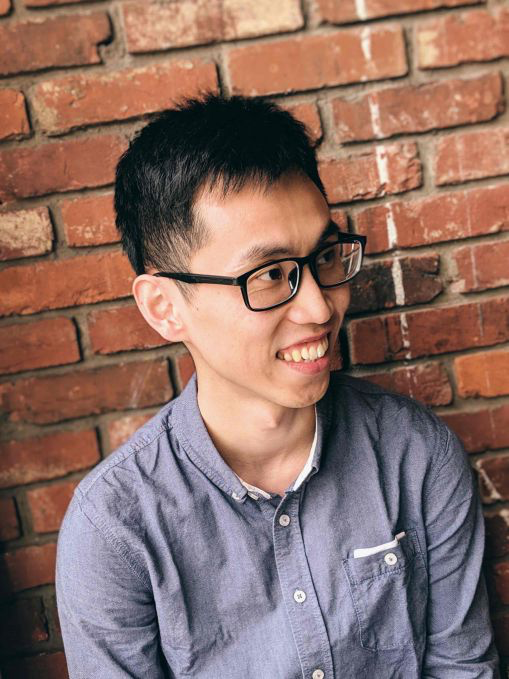
I am a research scientist at Google. Prior to joining Google, I received my PhD in machine learning from Carnegie Mellon University. I have broad interests in machine learning from theory to applications.
Please refer to my personal page for more information.
Authored Publications
Sort By
Preview abstract
Autonomous research agents can now produce competitive solutions and complete manuscripts, yet their papers routinely contain fabricated citations, method descriptions disconnected from the code, and scores on incorrect scales---failures invisible to evaluations that assess fluency rather than evidentiary grounding. The core problem is verifiability: no existing system maintains a traceable chain from each claim in the paper to its grounding evidence, and current evaluation protocols assess output fluency rather than evidentiary grounding. We address this with Chaine-of-Evidence (CoE), a verifiability standard requiring every claim to trace to its grounding evidence, and instantiate it in Scientist One, an end-to-end research system that maintains evidence chains natively, and CoE Audit, an evaluation protocol with four integrity checks targeting the most damaging chain failures. Auditing 60 papers from four systems, we find every baseline exhibits at least one failure: phantom citations at 4--25%, method-code alignment in at most 2/15 papers. Scientist One achieves zero phantom citations (0/830), the highest alignment rate (7/15), and competitive solver scores.
View details
TFRBench: A Reasoning Benchmark for Evaluating Forecasting Systems
MD ATIK AHAMED
Qiang Cheng
Forty-third International Conference on Machine Learning (2026)
Preview abstract
Time-series forecasting has traditionally been evaluated solely on numerical accuracy, treating models as "black boxes'' that fail to capture the underlying reasoning. To address this gap, we introduce TFRBench, a novel benchmark designed to evaluate the reasoning capabilities of forecasting systems alongside their numerical accuracy. Unlike existing benchmarks, TFRBench requires models to generate verifiable natural language reasoning by analyzing cross-channel dependencies, identifying strategic trends, and justifying significant events using external context. To construct this benchmark, we propose a systematic multi-agent framework comprising Reasoning, Search, Verifier, Forecasting, and Summary agents. Our benchmark spans five diverse domains including Energy, Sales, Web/CloudOps, Transportation, and Finance, covering 10 distinct datasets. Qualitative evaluation confirms that our generated reasoning is highly faithful and effective; specifically, Large Language Models (LLMs) prompted with our generated reasoning demonstrate significantly improved forecasting accuracy compared to direct forecasting with LLMs. Conversely, benchmarking experiments reveal that off-the-shelf LLMs consistently struggle with both reasoning (shows lower LLM-as-Judge scores) and direct numerical forecasting (MAE and MASE), frequently failing to capture domain-specific dynamics. TFRBench thus establishes a new standard for interpretable, reasoning-based evaluation in time-series forecasting.
View details
Found in the middle: Calibrating Positional Attention Bias Improves Long Context Utilization
Cheng-Yu Hsieh
Yung-Sung Chuang
Abhishek Kumar
James Glass
Alexander Ratner
Ranjay Krishna
2024
Preview abstract
Large language models (LLMs), even when specifically trained to process long input contexts, struggle to capture relevant information located in the middle of their input. This phenomenon has been known as the lost-in-the-middle problem. In this work, we make three contributions. First, we set out to understand the factors that cause this phenomenon. In doing so, we establish a connection between lost-in-the-middle to LLMs' intrinsic attention bias: LLMs exhibit a U-shaped attention bias where the tokens at the beginning and at the end of its input receive higher attention, regardless of their relevance. Second, we mitigate this positional bias through a calibration mechanism, found-in-the-middle, that allows the model to attend to contexts faithfully according to their relevance, even though when they are in the middle. Third, we show found-in-the-middle not only achieves better performance in locating relevant information within a long context, but also eventually leads to improved retrieval-augmented generation (RAG) performance across various tasks, outperforming existing methods by up to 15 percentage points. These findings open up future directions in understanding LLM attention bias and its potential consequences.
View details
CodecLM: Aligning Language Models with Tailored Synthetic Data
Jin Miao
NAACL 2024
Preview abstract
Instruction tuning has emerged as the key in aligning large language models (LLMs) with specific task instructions, thereby mitigating the discrepancy between the next-token prediction objective and users' actual goals. To reduce the labor and time cost to collect or annotate data by humans, researchers start to explore the use of LLMs to generate instruction-aligned synthetic data. Recent works focus on generating diverse instructions and applying LLM to increase instruction complexity, often neglecting downstream use cases. It remains unclear how to tailor high-quality data to elicit better instruction-following abilities in different target instruction distributions and LLMs. To this end, we introduce CodecLM, a general framework for adaptively generating high-quality synthetic data for LLM alignment with different downstream instruction distributions and LLMs. Drawing on the Encode-Decode principles, we use LLMs as codecs to guide the data generation process. We first encode seed instructions into metadata, which are concise keywords generated on-the-fly to capture the target instruction distribution, and then decode metadata to create tailored instructions. We also introduce Self-Rubrics and Contrastive Filtering during decoding to tailor data-efficient samples. Extensive experiments on four open-domain instruction following benchmarks validate the effectiveness of CodecLM over the current state-of-the-arts.
View details
Chain-of-Table: Evolves Tables in the LLM Reasoning Chain for Table Understanding
Zilong Wang
Hao Zhang
Jingbo Shang
ICLR (2024)
Preview abstract
Table-based reasoning with large language models (LLMs) is a promising direction to tackle many table understanding tasks, such as table-based question answering and fact verification. Compared with generic reasoning, table-based reasoning requires the extraction of underlying semantics from both free-form questions and semi-structured tabular data. Chain-of-Thought and its similar approaches incorporate the reasoning chain in the form of textual context, but it is still an open question how to effectively leverage tabular data in the reasoning chain. We propose the Chain-of-Table framework, where tabular data is explicitly used in the reasoning chain as a proxy for intermediate thoughts. Specifically, we guide LLMs using in-context learning to iteratively generate operations and update the table to represent a tabular reasoning chain. LLMs can therefore dynamically plan the next operation based on the results of the previous ones. This continuous evolution of the table forms a chain, showing the reasoning process for a given tabular problem. The chain carries structured information of the intermediate results, enabling more accurate and reliable predictions. Chain-of-Table achieves new state-of-the-art performance on WikiTQ, FeTaQA, and TabFact benchmarks across multiple LLM choices.
View details
Preview abstract
We study anomaly clustering, grouping data into coherent clusters of anomaly types. This is different from anomaly detection that aims to divide anomalies from normal data.Unlike object-centered image clustering, anomaly clustering is particularly challenging as anomalous patterns are subtle and local. We present a simple yet effective clustering framework using a patch-based pretrained deep embeddings and off-the-shelf clustering methods. We define a distance function between images, each of which is represented as a bag of embeddings, by the Euclidean distance between weighted averaged embeddings. The weight defines the importance of instances (i.e., patch embeddings) in the bag, which may highlight defective regions. We compute weights in an unsupervised way or in a semi-supervised way when labeled normal data is available. Extensive experimental studies show the effectiveness of the proposed clustering framework along with a novel distance function upon existing multiple instance or deep clustering frameworks. Overall, our framework achieves 0.451 and 0.674 normalized mutual information scores on MVTec object and texture categories and further improve with a few labeled normal data(0.577, 0.669), far exceeding the baselines (0.244, 0.273)or state-of-the-art deep clustering methods (0.176, 0.277).
View details
Pic2Word: Mapping Pictures to Words for Zero-shot Composed Image Retrieval
Kuniaki Saito
Kihyuk Sohn
Xiang Zhang
Kate Saenko
CVPR (2023)
Preview abstract
In Composed Image Retrieval (CIR), a user combines a query image with text to describe their intended target. Existing methods rely on supervised learning of CIR models using labeled triplets consisting of the query image, text specification, and the target image. Labeling such triplets is expensive and hinders broad applicability of CIR. In this work, we propose to study an important task, Zero-Shot Composed Image Retrieval (ZS-CIR), whose goal is to build a CIR model without requiring labeled triplets for training. To this end, we propose a novel method, called Pic2Word, that requires only weakly labeled image-caption pairs and unlabeled image datasets to train. Unlike existing supervised CIR models, our model trained on weakly labeled or unlabeled datasets shows strong generalization across diverse ZS-CIR tasks, e.g., attribute editing, object composition, and domain conversion. Our approach outperforms several supervised CIR methods on the common CIR benchmark, CIRR and Fashion-IQ.
View details
Preview abstract
Real-world time-series datasets are often multivariate with complex dynamics. To capture this complexity, high capacity architectures like recurrent- or attention-based sequential deep learning models have become popular. However, recent work demonstrates that simple univariate linear models can outperform such deep learning models on several commonly used academic benchmarks. Extending them, in this paper, we investigate the capabilities of linear models for time-series forecasting and present Time-Series Mixer (TSMixer), a novel architecture designed by stacking multi-layer perceptrons (MLPs). TSMixer is based on mixing operations along both the time and feature dimensions to extract information efficiently. On popular academic benchmarks, the simple-to-implement TSMixer is comparable to specialized state-of-the-art models that leverage the inductive biases of specific benchmarks. On the challenging and large scale M5 benchmark, a real-world retail dataset, TSMixer demonstrates superior performance compared to the state-of-the-art alternatives. Our results underline the importance of efficiently utilizing cross-variate and auxiliary information for improving the performance of time series forecasting. We present various analyses to shed light into the capabilities of TSMixer. The design paradigms utilized in TSMixer are expected to open new horizons for deep learning-based time series forecasting. The implementation
is available at: https://github.com/google-research/google-research/tree/master/
tsmixer .
View details
Prefix Conditioning Unifies Language and Label Supervision
Kuniaki Saito
Kihyuk Sohn
Xiang Zhang
Kate Saenko
CVPR (2023)
Preview abstract
Vision-language contrastive learning suggests a new learning paradigm by leveraging a large amount of image-caption-pair data. The caption supervision excels at providing wide coverage in vocabulary that enables strong zero-shot image recognition performance. On the other hand, label supervision offers to learn more targeted visual representations that are label-oriented and can cover rare categories. To gain the complementary advantages of both kinds of supervision for contrastive image-caption pre-training, recent works have proposed to convert class labels into a sentence with pre-defined templates called prompts. However, a naive unification of the real caption and the prompt sentences could lead to a complication in learning, as the distribution shift in text may not be handled properly in the language encoder. In this work, we propose a simple yet effective approach to unify these two types of supervision using prefix tokens that inform a language encoder of the type of the input sentence (e.g., caption or prompt) at training time. Our method is generic and can be easily integrated into existing VL pre-training objectives such as CLIP or UniCL. In experiments, we show that this simple technique dramatically improves the performance in zero-shot image recognition accuracy of the pre-trained model.
View details
SPADE: Semi-supervised Anomaly Detection under Distribution Mismatch
Kihyuk Sohn
Transactions on Machine Learning Research (TMLR) (2023)
Preview abstract
Semi-supervised anomaly detection is a common problem, as often the datasets containing anomalies are partially labeled. We propose a canonical framework: Semi-supervised Pseudo-labeler Anomaly Detection with Ensembling (SPADE) that isn't limited by the assumption that labeled and unlabeled data come from the same distribution. Indeed, the assumption is often violated in many applications -- for example, the labeled data may contain only anomalies unlike unlabeled data, or unlabeled data may contain different types of anomalies, or labeled data may contain only `easy-to-label' samples. SPADE utilizes an ensemble of one class classifiers as the pseudo-labeler to improve the robustness of pseudo-labeling with distribution mismatch. Partial matching is proposed to automatically select the critical hyper-parameters for pseudo-labeling without validation data, which is crucial with limited labeled data. SPADE shows state-of-the-art semi-supervised anomaly detection performance across a wide range of scenarios with distribution mismatch in both tabular and image domains. In some common real-world settings such as model facing new types of unlabeled anomalies, SPADE outperforms the state-of-the-art alternatives by 5% AUC in average.
View details