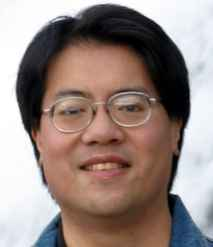
Theodore Ts'o
Theodore Ts'o is the first North American Linux Kernel Developer,
having started working with Linux in September, 1991. He also served
as the tech lead for the MIT Kerberos V5 development team, chair for
the IP Security working group in the IETF, and was the architect at
IBM in charge of bringing bring real-time Linux in support of
real-time Java to the US Navy. He previously served as CTO for the
Linux Foundation, and is currently employed at Google. Theodore is a
Debian Developer, and is the maintainer of the ext4 file system in the
Linux kernel. He is the maintainer and original author of the
e2fsprogs userspace utilities for the ext2, ext3, and ext4 file
systems.
Authored Publications
Sort By
Preview abstract
JBD2, the current physical journaling mechanism in Ext4 is bulky and resource-hungry. Specifically, in case of metadataheavy workloads, fsyncs issued by applications cause JBD2 to write copies of changed metadata blocks, incurring high byte and IO overhead. When storing data in Ext4 via NFS (a popular setup), the NFS protocol issues fsyncs for every file metadata update which further exacerbates the problem. In a simple multi-threaded mail-server workload, JBD2 consumed approximately 76% of the disk’s write bandwidth. Higher byte and IO utilization of JBD2 results in reduced application throughput, higher wear-out of flash based media and increased performance provisioning costs in cloud-based storage services.
In this paper, we present hybrid journaling for Ext4 which performs logical journaling for simple and frequent file system modifications, while relying on JBD2 for more complex and rare modifications. Key design ingredients of XCOMMIT are compact logging, selective flushing and inline journaling. The first two techniques work together to ensure that over 80% commits are contained within a single 4KB block and are written to disk without requiring an expensive cache flush operation. Inline journaling minimizes context switching delays. With faster and efficient fsyncs, XCOMMIT reduces throughput interference of JBD2 by over 2× along with throughput improvements of up to 120%. We implemented XCOMMIT in Ext4 and successfully merged our code to the upstream Linux kernel.
View details
Evolving Ext4 for Shingled Disks
Abutalib Aghayev
Garth Gibson
Peter Desnoyers
15th USENIX Conference on File and Storage Technologies (FAST 17) (2017), pp. 105-120
Preview abstract
Drive-Managed SMR (ShingledMagnetic Recording) disks offer a plug-compatible higher-capacity replacement for conventional disks. For non-sequential workloads, these disks show bimodal behavior: After a short period of high throughput they enter a continuous period of low throughput.
We introduce ext4-lazy, a small change to the Linux ext4 file system that significantly improves the throughput in both modes. We present benchmarks on four different drive-managed SMR disks from two vendors, showing that ext4-lazy achieves 1.7-5.4x improvement over ext4 on a metadata-light file server benchmark. On metadata-heavy benchmarks it achieves 2-13x improvement over ext4 on drive-managed SMR disks as well as on conventional disks.
View details
Preview abstract
Disks form the central element of Cloud-based storage, whose demand far outpaces the considerable rate of innovation in disks. Exponential growth in demand, already in progress for 15+ years, implies that most future disks will be in data centers and thus part of a large collection of disks. We describe the “collection view” of disks and how it and the focus on tail latency, driven by live services, place new and different requirements on disks. Beyond defining key metrics for data-center disks, we explore a range of new physical design options and changes to firmware that could improve these metrics.
We hope this is the beginning of a new era of “data center” disks and a new broad and open discussion about how to evolve disks for data centers. The ideas presented here provide some guidance and some options, but we believe the best solutions will come from the combined efforts of industry, academia and other large customers.
View details