Using wearables to enable cardiovascular-kidney-metabolic (CKM) risk profiling for personalized coaching
November 11, 2026
Zeinab Esmaeilpour and Ahmed A. Metwally, Research Scientists, Google Research
We introduce an investigational machine learning framework that translates passive wearable signals into a modifiable coachable health age, uses an action-conditioned world model to simulate personalized 12-week "what-if" habit trajectories, and expands to routine blood biomarkers to track early cardiovascular-kidney-metabolic (CKM) health.
Quick links
Heart disease, kidney conditions, and metabolic disorders like type 2 diabetes aren't isolated, they form an interconnected web known as cardiovascular-kidney-metabolic (CKM) syndrome. CKM progression often begins silently years before symptoms appear, shaped by everyday habits like movement, sleep, and cardiovascular activity. Catching these subtle shifts early offers the best chance to reverse the trend. Yet while smartwatches easily track what we did yesterday, moving from passive tracking to meaningful action is much harder: How do my daily habits affect my CKM right now? And if I sleep 30 minutes longer or add a brisk walk to my routine, how much will my health improve over the next three months?
Age is often seen as playing a part in answering these questions, but chronological age alone isn’t enough because two people born in the same year can have vastly different physiological health. While researchers have developed “biological clocks” from blood tests or wearable sensors to estimate whether someone's body is aging faster or slower than their calendar age, most existing clocks aren't built for everyday coaching. Many are trained simply to estimate the birth year, latching onto traits you can't easily change, or act as black boxes that can't show how modifying a specific habit will shift your future health.
In "Personalized health coaching via coachable health age and counterfactual wearable trajectories” and our companion study, “Cardiovascular-Kidney-Metabolic Health Age Using Wearables and Blood Biomarkers”, we introduce an investigational framework designed to close the loop between tracking a person’s health and actively improving it. The framework provides the following:
- A coachable health age model: An interpretable health-age metric built entirely from modifiable daily behaviors and physiology captured passively by consumer wearables.
- A sensor world model and counterfactual coaching system: A machine learning world model (SensorWM) trained on over 2.2 million person-weeks of wearable data that simulates personalized 12-week "what-if" health trajectories, paired with a language model agent that turns those simulations into realistic, clinician-vetted coaching plans.
- Expansion to multi-organ CKM health: When routine blood tests are available, our framework can be expanded to combine wearable streams with lab biomarkers to detect early, subclinical strain across the heart, kidney, and metabolic systems.
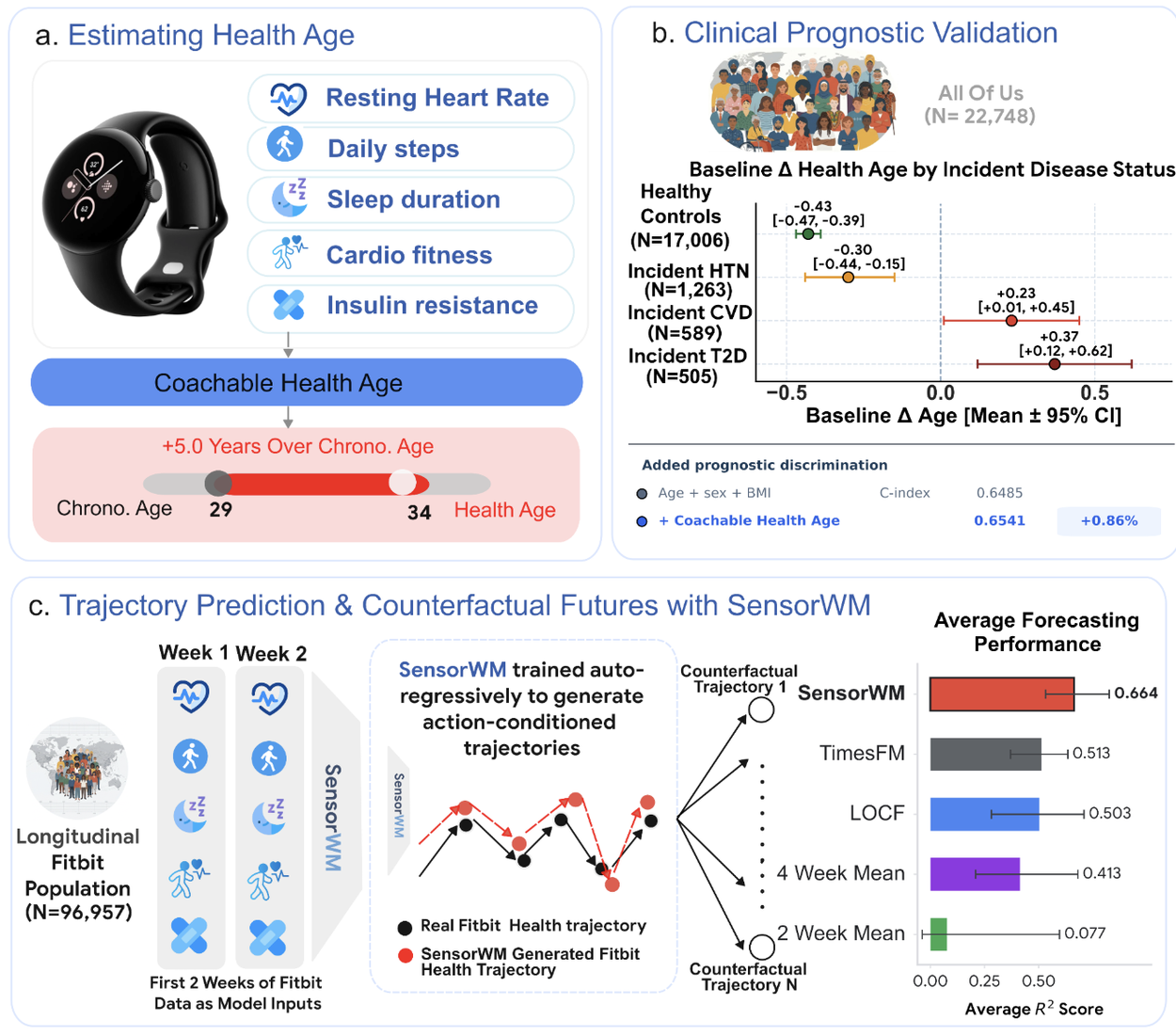
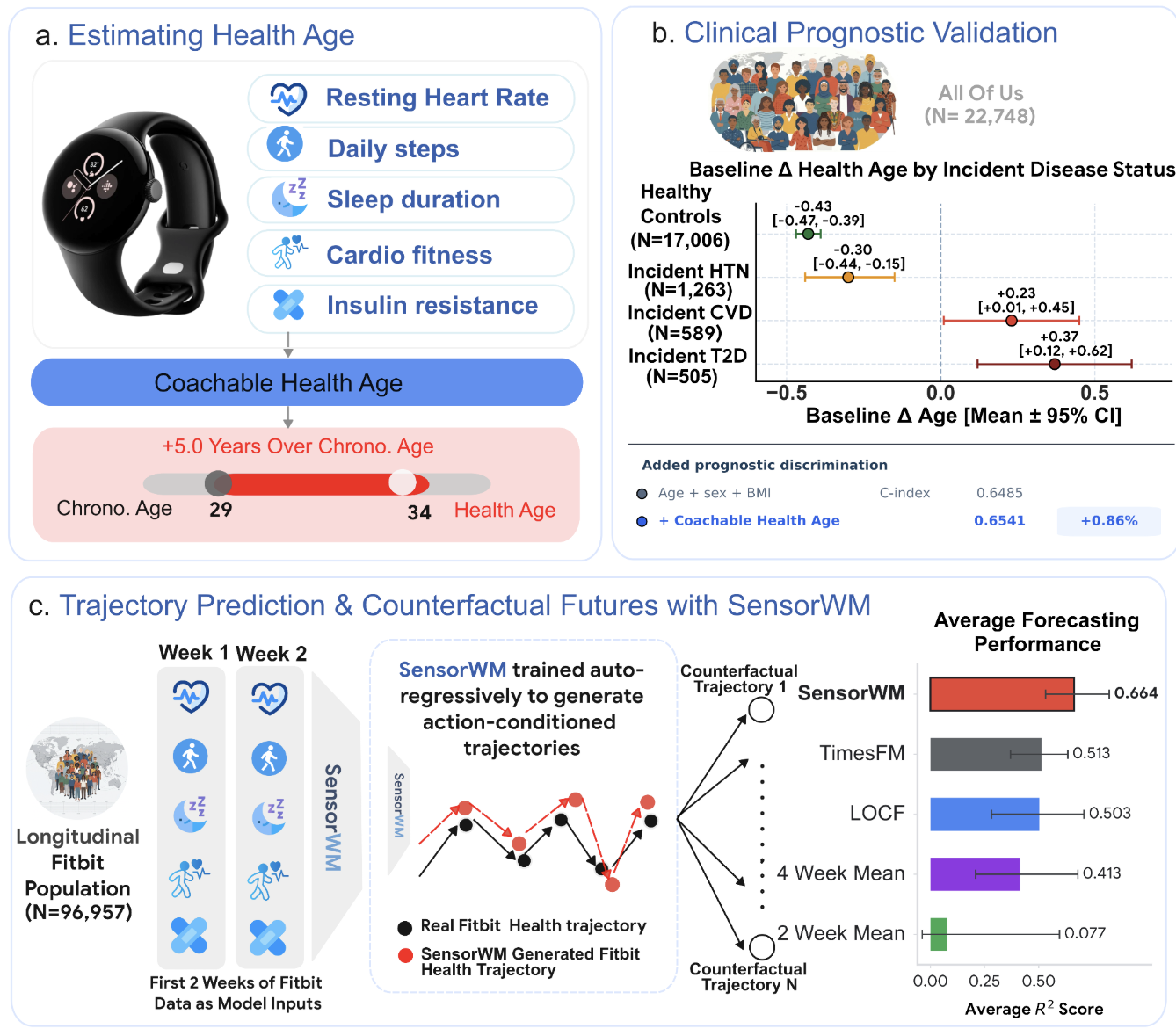
Overview of our framework, from estimating coachable health age and predicting long-term disease risk to simulating 12-week "what-if" habit trajectories for personalized coaching.
A health age metric you can actually move
To make a health metric useful for coaching, every input should be something that can be tracked continuously and influenced through daily choices. Rather than training a model to guess a person’s birth year, we grounded our coachable health age (CHA) model in published epidemiological studies linking everyday behaviors to cardio-metabolic disease risk. CHA integrates four core signals passively measured by consumer wearables — resting heart rate, daily step count, sleep duration, and weekly Active Zone Minutes — alongside optional markers like VO2max, sleep schedule regularity, and insulin resistance, when available. Because active people often have lower resting heart rates and better sleep, we mathematically adjust for overlap across these signals so each habit contributes its distinct share to your health age delta, the difference between your CHA and chronological age. A negative delta (say, −3 years) means an individual's physiological profile appears younger than their chronological age, while a positive delta signals accelerated aging.
We validated this model across three independent cohorts:
- Predicting future disease (All of Us research program, n = 22,748): Across more than 68,000 person-years of consenting Fitbit and electronic health record follow-up, healthy participants who had a health age older than their calendar age at baseline were significantly more likely to develop hypertension, cardiovascular disease, or type 2 diabetes over the next eight years. Adding CHA to standard clinical metrics (age, sex, and BMI) significantly improved disease risk prediction, especially among adults under 50.
- Improvement over time (longitudinal Fitbit cohort, n = 1,464): Tracking users across consecutive 3-month windows over two years showed that among users with a sustained change in habits, the CHA decreased.
- Alignment with clinical health (WEAR-ME study): Unlike wearable aging clocks trained to predict chronological age, CHA aligned better with the modified American Heart Association's Life's Essential 8 cardiovascular score and metabolic syndrome severity score, as well as participants' own self-reported health.
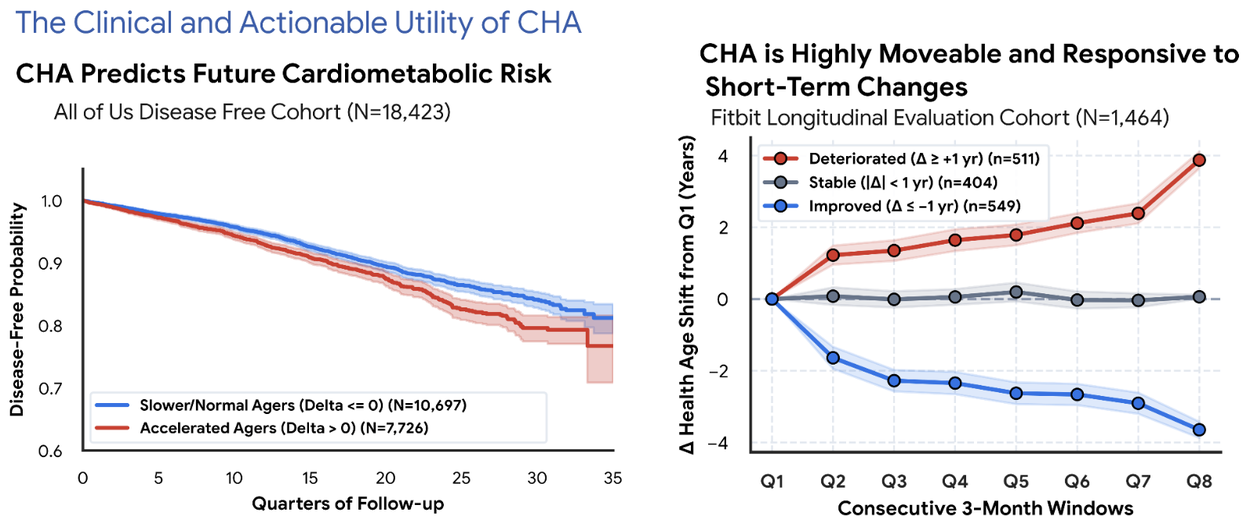
Across 18,423 disease-free participants in the All of Us cohort, those with a health age younger than or equal to their calendar age had significantly higher disease-free survival over 8 years (left), while 2-year longitudinal tracking shows that individuals can meaningfully lower their health age over 3-month windows (right).
Playing out "what-if" futures with a sensor world model
Knowing your health age tells you where you stand today. Turning that number into a personalized plan requires answering a "what-if" (or counterfactual) question: What will happen to my body over the next 12 weeks if I change specific habits, and which plan can I realistically stick with?
Simply plugging new step or sleep targets into a static calculator misses how the body adapts as a connected system. When you consistently move more and sleep better over several weeks, your resting heart rate and heart rate variability gradually improve too, creating extra health benefits downstream.
To capture these dynamics, we developed Sensor World Model (SensorWM), an action-conditioned world model pre-trained on 2.28 million person-weeks of de-identified data from roughly 100,000 consenting Fitbit users. Given two weeks of baseline wearable data, SensorWM forecasts how 20 physiological markers will evolve over the next 12 weeks under different daily steps, sleep, and cardio routines, outperforming general-purpose time-series foundation models like TimesFM while preserving the clinical patterns associated with diabetes, hypertension, and insulin resistance.
We paired SensorWM with a feasibility-constrained optimizer and a language model coaching agent to do three things:
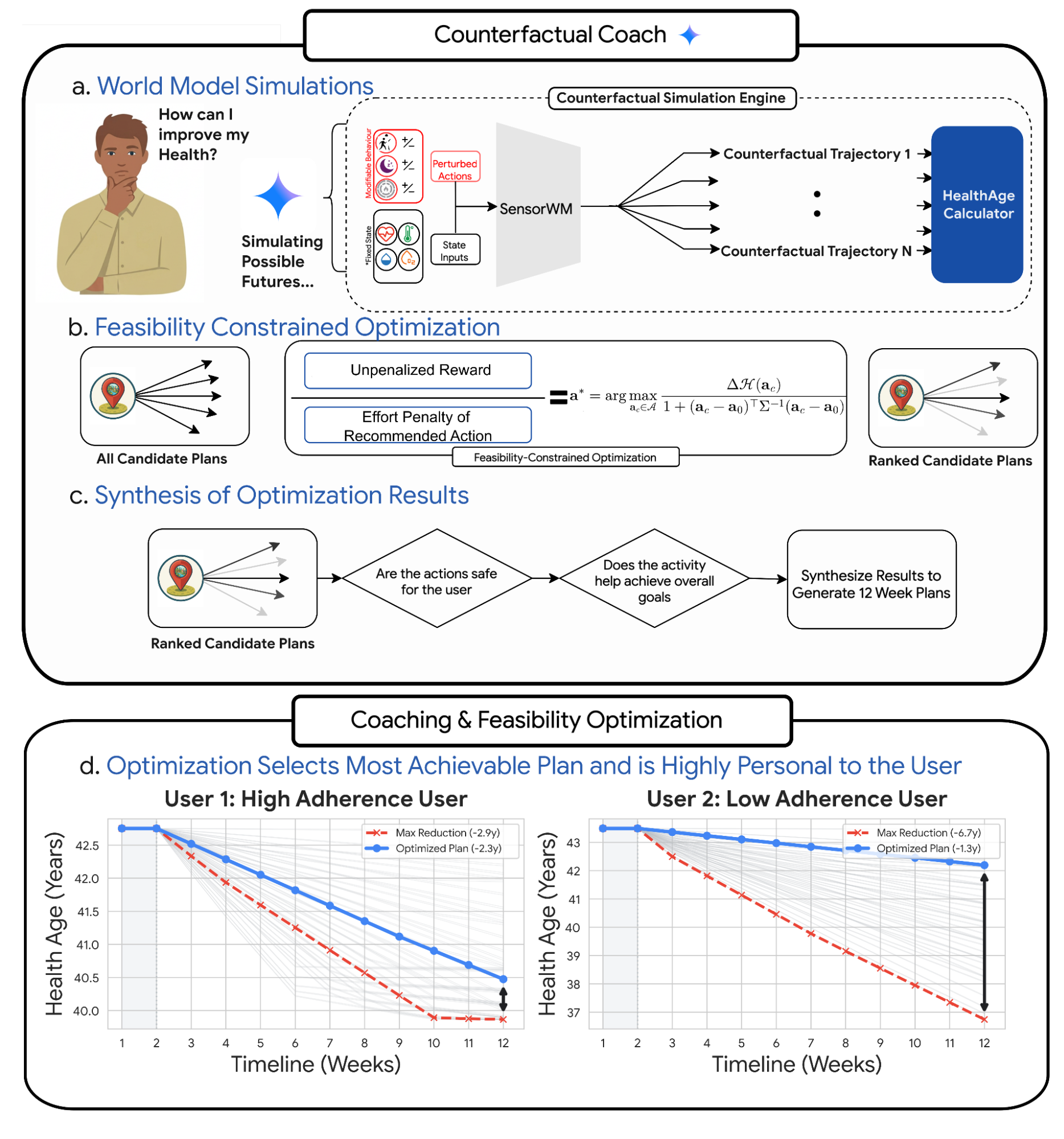
- Simulate: SensorWM rolls out 125 candidate 12-week habit combinations for each person, comparing them against a "status-quo" projection if habits stay the same.
- Filter for realism and safety: The most aggressive workout plan doesn't help if it causes burnout in week two. Our optimizer weighs projected health-age reductions against each person's historical habit flexibility and clinical safety bounds, picking a more ambitious target (−2.3 years) for someone with high baseline flexibility, and a gentler ramp (−1.3 years) for someone whose routine is more constrained.
- Coach: The language model translates the top-ranked pathways into a supportive, progressive 12-week coaching plan.
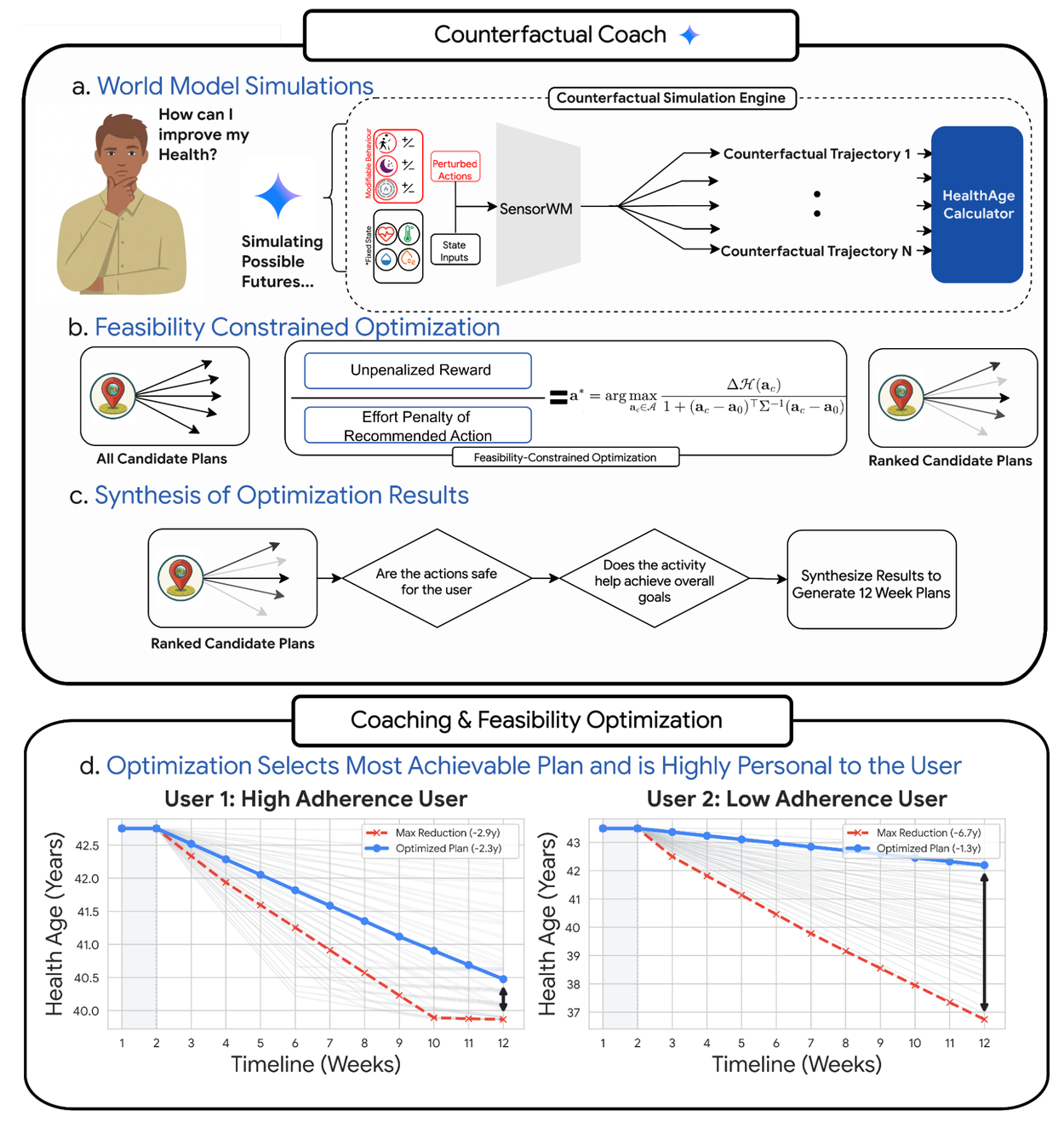
SensorWM simulates 12-week physiological responses under candidate habit changes and balances health-age improvement against each person's historical habit flexibility.
Put to the test by lifestyle coaches and clinicians
Does grounding a language model in world-model simulations actually produce better guidance than giving the exact same model a user's wearable history alone?
We ran a blinded, head-to-head study with five certified lifestyle coaches and five board-certified primary care and lifestyle medicine physicians across 49 participant profiles spanning five behavioral personas (490 paired reviews total), alongside automated evaluations across the full WEAR-ME cohort (n = 2,780).
- Strong expert preference: Lifestyle coaches chose the counterfactual-grounded plan as the best overall plan in 71.4% of evaluations (p < 0.001) and rated it more likely to drive long-term adherence in 71.0% of evaluations (p < 0.001).
- Clinician-verified safety: Physicians rated 99.2% of counterfactual plans within safe exercise intensity limits and 97.6% accurate on physiological claims.
- Why it worked: Both coaches and clinicians highlighted that showing people a concrete contrast between their "status-quo" trajectory and achievable "what-if" options (92% vs. 8% among clinicians) gave them a clear, motivating reason to act and a stronger sense of agency (97% vs. 59%).
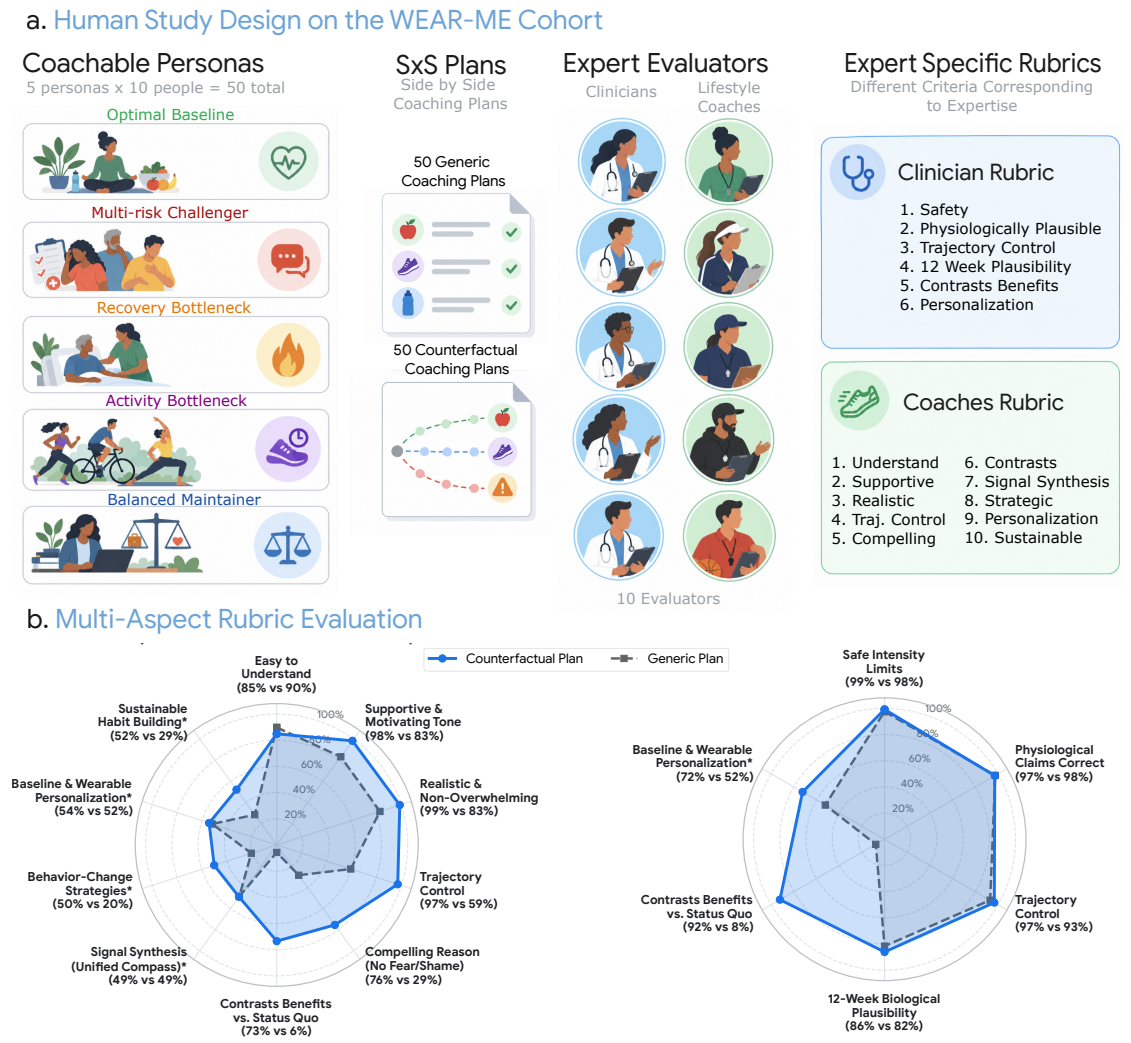
In blinded evaluations by certified lifestyle coaches and board-certified clinicians, counterfactual-grounded coaching plans were preferred nearly 3-to-1 over generic wearable-grounded plans while meeting 99.2% clinical safety standards.
Zooming in on organ systems: Adding routine blood biomarkers for CKM health
Because our health age model is modular, it can easily incorporate routine clinical lab tests when available. In our companion study, we expanded the framework to profile CKM syndrome across individual organ systems, pairing continuous wearables with occasional blood biomarkers that alone miss day to day lifestyle patterns.
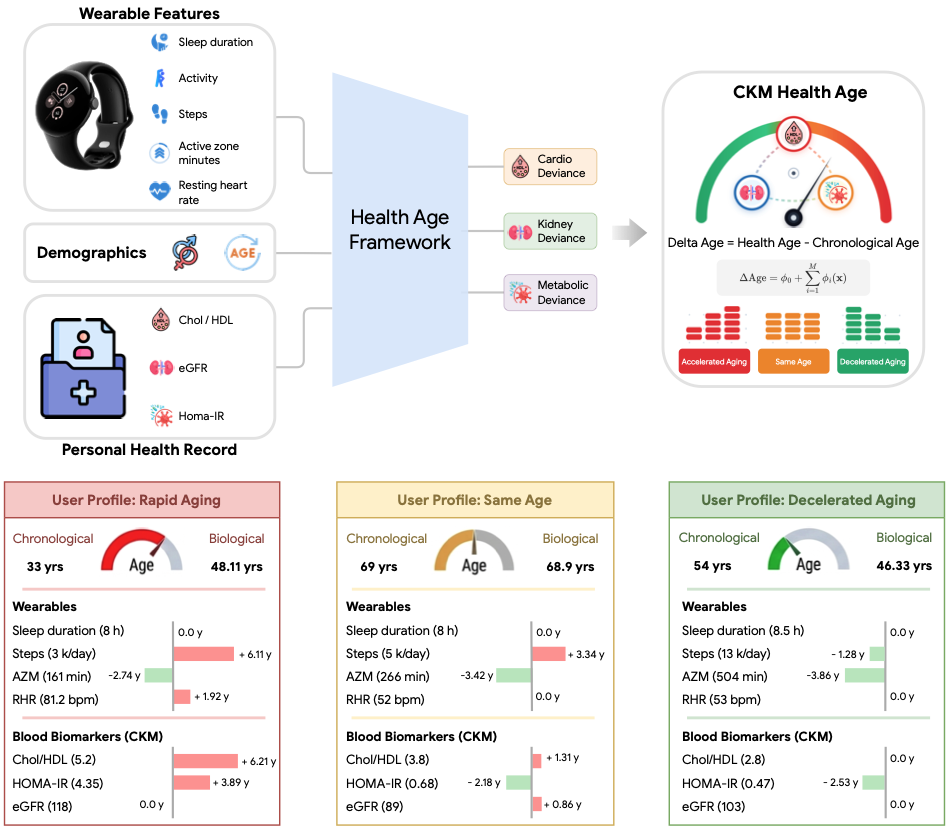
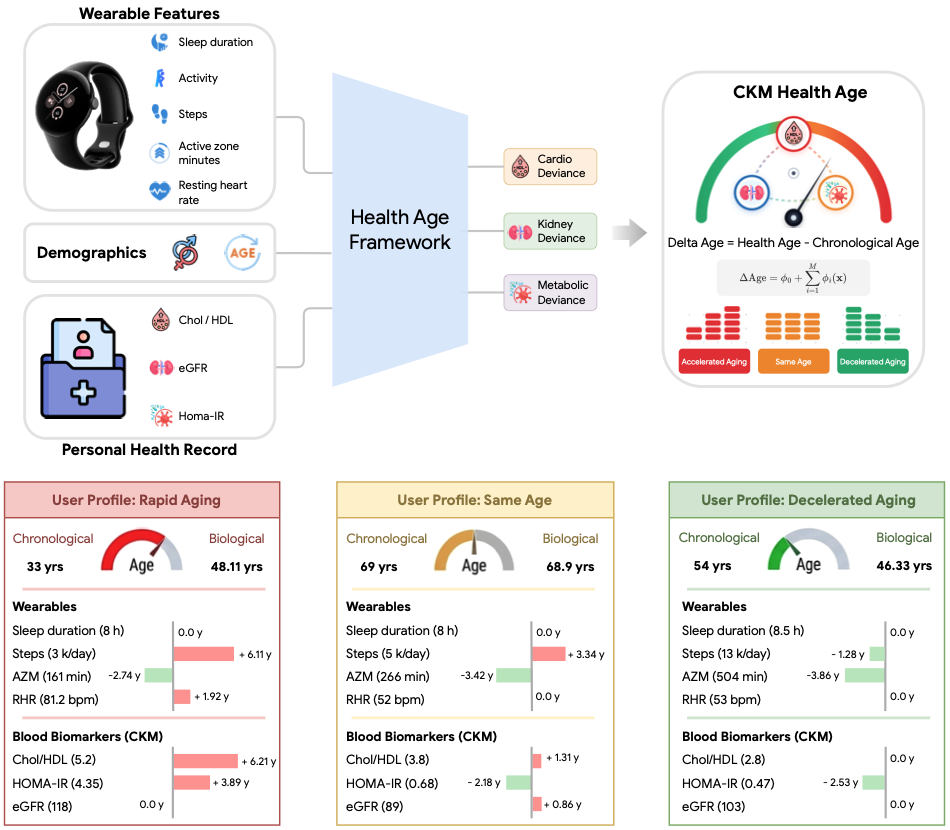
Conceptual framework of the multimodal CKM health age model, integrating wearable physiology with organ-specific blood biomarkers across diverse aging profiles.
Early CKM decline rarely causes symptoms, and occasional clinic blood draws miss day-to-day lifestyle patterns. Evaluated in 819 WEAR-ME participants, our multimodal CKM health age model combines continuous wearable signals (resting heart rate, steps, active zone minutes, and sleep) with three routine blood biomarkers: cholesterol-to-HDL ratio (cardiovascular), eGFR (kidney filtration), and HOMA-IR (metabolic insulin resistance).
By measuring how far each marker departs from healthy clinical thresholds (a normalized deviance score), the CKM model revealed that multi-organ aging doesn't follow a single template: while metabolic and cardiovascular strain are often correlated, early kidney decline frequently appears independently. Moreover, the resulting CKM health age gap aligned closely with both objective clinical scores (modified Life's Essential 8 r = −0.58; metabolic syndrome severity r = 0.65) and how healthy participants felt day to day.

Population-level heterogeneity across kidney, metabolic, and cardiovascular systems (teal = healthier than reference; brown = subclinical strain), showing why personalized multi-organ profiling matters.
Looking ahead
Together, these studies show how consumer wearables and machine learning can help shift personal health from looking in the rearview mirror to navigating the road ahead. While our evaluations were conducted offline using retrospective research cohorts, and these models are investigational research prototypes rather than clinical diagnostic tools, they lay the foundation for future prospective trials testing how interactive "what-if" coaching can help people build lasting habits and improve their long-term health.
Acknowledgements
The research described here is joint work across Google Research and partnering teams. Contributors include Zeinab Esmaeilpour, Simon A. Lee, Menglian Zhou, Marius Guerard, Sohrab Sidhu, Alexandru Solot, Hamid Palangi, Pramod Rudrapatna, Ming-Zher Poh, Max A. Xu, Daniel McDuff, Dimitrios Antos, Yuzhe Yang, Jeffrey N. Chiang (from UCLA), Anthony Z. Faranesh, Conor Heneghan, Lindsey Sunden, Mark Malhotra, Cathy Speed, Javier L. Prieto, Shwetak Patel, A. Ali Heydari, and Ahmed A. Metwally.
Quick links
Other posts of interest
-
November 5, 2026
Detecting signs of hypertension using wearable sensors- Health & Bioscience ·
- Machine Intelligence
-

November 4, 2026
Agile Deliberation: How AI helps humans define the gray areas- Data Mining & Modeling ·
- Generative AI ·
- Human-Computer Interaction and Visualization ·
- Machine Intelligence
-

October 27, 2026
The sleep framework: A new way for LLMs to retain knowledge in continual learning- Education Innovation ·
- General Science ·
- Machine Intelligence ·
- Natural Language Processing